

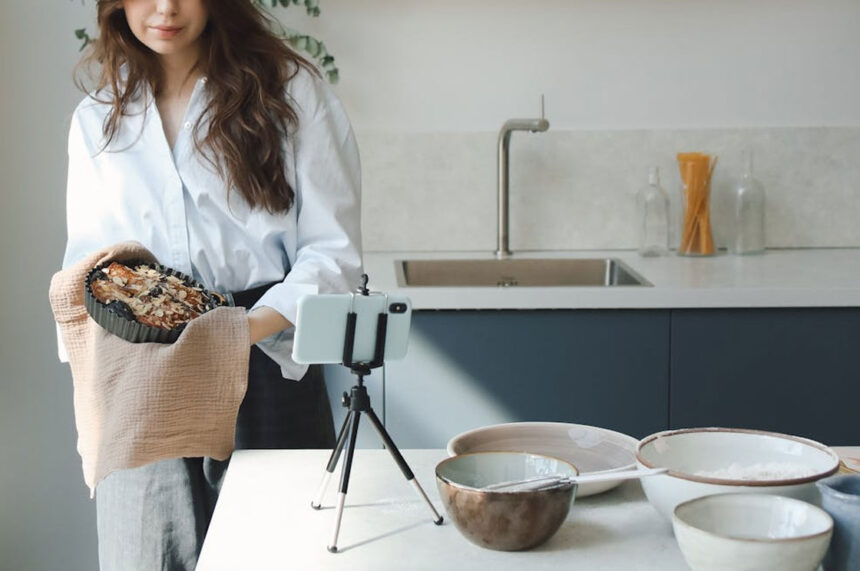
Success Story How One Blogger Transformed Their Income Through Kitchen Affiliates
About three years ago Sarah Mitchell was a teacher at a primary school located in Manchester, England, running a tiny food blog just out of a love for food. She was a cook, she loved writing and she was awed by the small but dedicated group of readers who gathered every week to look over her kitchen-related posts and recipes. The blog was able to earn little or nothing- the blog earned a few dollars a month from display ads which barely covered the hosting costs.
Sarah’s blog today – The Thoughtful Kitchen earns over 12,000 dollars per month in affiliate revenue by itself. She quit teaching 18 months ago. She lives at home has her own hours and travels as she pleases and is able to spend her days doing what she is most passionate about cooking and writing. She also helps her three80,000 daily readers to make more informed choices about the equipment they employ in their kitchens.
This is the tale of how she went about this — her mental shifting, her strategic choices as well as how the contents changed things as well as the lessons learned throughout the process. If you’re a food blogger or a YouTuber who cooks, or any other person who is building a content platform that revolves around food and cooking Sarah’s experience is packed with tips that can change your income.
The Beginning: Passion Without Strategy
Sarah created The Thoughtful Kitchen in 2019 to provide an outlet for her creativity in the midst of a difficult school time.
“I needed somewhere to put my energy outside of work,” she says. “Cooking had always been my therapy. The blog was just a way of documenting what I was making and sharing recipes with friends and family.”
In the beginning, for 18 years, this blog expanded slowly, but steady — mostly via the word of mouth as well as a small Instagram following and a handful of Pinterest pins that would occasionally go viral. In early 2021 she had more than 15,000 monthly visitors and was earning around PS80 per month from display ads.
“I knew people monetised food blogs,” she states. “I’d read about it. But it all seemed very complicated and I wasn’t sure where to start. I also felt uncomfortable with the idea of selling to my audience. That discomfort held me back for a long time.”
The turning point occurred in February 2021. Sarah’s article about her favourite soup pan — a post she had written in a casual manner and without commercial intention began to rank on the first webpage on Google search results for “best soup pot for home cooks.” The readers began to email asking where they could get the pot.
“I didn’t even have an affiliate link in that post,” she smiles. “I was sending people to Google to find it themselves. That’s when I realised I was missing something significant.”
The Mindset Shift That Changed Everything
Before Sarah was able to earn a steady affiliate business, she had to settle her internal dispute regarding the issue of monetisation.
“My hesitation was genuine,” she says. “I’d read enough marketing content to be deeply suspicious of it. The idea of recommending something for money felt like a betrayal of the trust my readers had placed in me.”
The shift occurred through an easy shift in perspective — which she identifies as the most important mental shift she’s made.
“I asked myself — do I genuinely believe this soup pot is the best option for my readers? Yes. Would I recommend it to a close friend? Absolutely. Does the fact that I might earn PS8 when they buy it change the quality of the product or the sincerity of my recommendation? Not at all.”
In that instant, Sarah stopped thinking of affiliate marketing as selling, and began thinking of it as a way to recommend -exactly as she’d always done, but with the possibility of earning small amounts of money when her suggestions led to purchases.
“The discomfort completely dissolved once I understood that authentic recommendation and affiliate marketing are not in conflict. They’re the same thing, as long as you only ever recommend what you genuinely believe in. That boundary — only ever recommending what I’d buy myself — has never moved. It’s the foundation of everything.”
Building The Foundation (Months 1-4)
Armed with a fresh outlook and a clear how to proceed, Sarah spent the first four months of building her affiliate base methodically prior to anticipating a significant income.
What She Did First:
joined Amazon Associates instantly. “It was the obvious starting point — easy to join, every product was available, and my readers were already comfortable buying from Amazon. The commission rates aren’t spectacular but the conversion rates are high and it got me started.”
The author analyzed every article for affiliate links. She went through each piece written of The Thoughtful Kitchen — nearly 140 posts to this moment — and found every mention of kitchen appliance, tool, or product. If the product was mentioned but without an affiliate link, she included the affiliate hyperlink. If the product was briefly mentioned the recommendation was extended by providing more details and context.
“That audit alone — which took me about two weekends — added PS200 to my first month’s affiliate income without writing a single new word,” she states. “The opportunities were already sitting there. I just hadn’t activated them.”
Created an “Kitchen Tools I Love” resource page. A single, dedicated page that lists every appliance, tool and product she personally tried and recommends -including affiliate links, short descriptions, and a candid commentary. The page, she claims was quickly one of the top-performing pages on the site.
“People who find my site and like what they read want to cook like me. They want to know what I use. A resource page answers that question completely and earns commissions continuously with minimal ongoing effort.”
The HTML0 code was applied to three direct brand programs. Alongside Amazon, Sarah applied to affiliate programs that include Le Creuset, KitchenAid, and Lakeland which is a well-loved British manufacturer of kitchenware. The three brands were all approved in less than two weeks.
“The commission rates from direct brand programmes are significantly better than Amazon — Le Creuset pays 8%, KitchenAid pays 10% on some products. And the cookie windows are longer. If someone clicks my Le Creuset link and buys three weeks later, I still earn the commission. With Amazon, that window is just 24 hours.”
Month 1-4 Results:
- Month 1 PS340 (primarily from the post audit and the new resource page)
- Month 2: PS510
- Month 3: PS720
- Month 4: PS980
“The growth felt almost unbelievable at first,” Sarah recalls. “I’d gone from PS80 a month to nearly PS1,000 in four months without dramatically increasing my traffic. I’d just activated what was already there and started being intentional about how I talked about products.”
The Content Strategy That Accelerated Everything (Months 4-12)
With a solid base in place, Sarah turned her attention to developing content that was specifically created to attract high-interest users who are looking for kitchen items and who are close to making purchases.
The Content Pivot:
Prior to her affiliate focus, Sarah’s posts were almost exclusively recipe-driven “How To Make The Perfect Risotto,” “My Favourite Autumn Soup,” “Simple Weeknight Pasta.” These were popular with her audience already, but she only received little new traffic due to the fact that the competition in search results for recipes is intense.
Her new strategy included another stream of content that focuses on kitchen products and the most popular keywords for purchase.
The First Big Win — A Stand Mixer Comparison Article:
After four months of her journey as an affiliate, Sarah published a 3,500-word article that compared between the KitchenAid Artisan and the Kenwood Chef stand mixers, both of which are among the sought-after and searched-for kitchen appliances available in the UK. The article included everything from capacities, performance the attachments available, their noise level aesthetics as well as value for money and what type of baker is best for each.
“I spent two weeks on that article,” she states. “I borrowed my sister’s Kenwood so I could genuinely test both machines side by side. I made bread, pastry, meringue, and cake batter in both. The review was completely honest — including the things I preferred about the Kenwood, even though the KitchenAid commission was higher.”
The article appeared at the top of Google within 3 months. Within six months, it generated an average of PS800 and PS1,400 in monthly affiliate commissions on its own in a single article.
“That article changed my understanding of what was possible,” Sarah states in a quiet voice. “One piece of genuinely useful, deeply researched content, ranking for the right keywords, can generate thousands of pounds per year indefinitely. That realisation fundamentally changed how I thought about content creation.”
The Content Types She Developed:
In-depth single review of the product: Comprehensive, honest and based on personal experience reviews of specific products, covering their quality, durability, performance as well as cons and pros and the best people to buy it for.
Head-to-head Comparison article: Direct comparisons between two different products aimed at users who have narrowed their options and required assistance in deciding. These were extremely well converted.
“Best Of” roundup articles: “Best Knives For Home Cooks,” “Best Non-Stick Pans,” “Best Kitchen Scales” -Comprehensive roundups aimed at readers who are at the beginning of their journey to research.
Guides to seasonal gifts: Published 6-8 weeks prior to christmas, Mother’s Day, and Valentine’s Day — “Best Kitchen Gifts For Bakers,” “The Perfect Foodie Gift Guide.” They became her highest month-long earnings when the seasons coincided.
Recipe posts that include embedded product suggestions: Her original recipe content is now enhanced by specific product suggestions. An Italian pasta-based recipe which naturally showcased the pasta maker. A bread recipe built around her Dutch oven. These links felt more like helpful sources than ads.
Month 4-12 Results:
- Month 6: PS2,100
- Month 8: PS3,400
- Month 10: PS4,800
- Month 12: PS6,200
“By the end of my first year of intentional affiliate marketing, I was earning more from the blog each month than I earned teaching,” she explains. “That was the moment I started seriously considering whether I could do this full-time.”
Going Full-Time And Scaling Up (Year 2)
Sarah gave her resignation at the school on September 20, 2022just 18 months after her journey to affiliate began. The decision was not made impulsively.
“I was very methodical about it,” she elaborates. “I wanted six months of consistent income above my teaching salary before I committed. I got there at month sixteen. I waited two more months just to be certain it wasn’t a fluke. Then I resigned.”
Being full-time allowed Sarah to devote much more time into the business, and the results grew rapidly.
What Changed When She Went Full-Time:
The volume of content grew dramatically. Teaching allowed her about 8-10 hours a week to blog. Full-time was 35 to 40 hours. She shifted from publishing two articles per week to four or even five. The more content she published, the better rankings as well as more affiliate links circulation, and faster growth in traffic.
She employed an editor on a part-time basis. “Editing and proofreading my own work was taking hours every week. Hiring an editor freed me to spend that time on research and writing — the high-value activities that directly drive income.”
She started an YouTube channel. Video content proved to be an effective stimulant in affiliate marketing. Showing products in use — like making bread with the KitchenAid and comparing three knifes for chefs side-by-side as well as comparing the performance of an expensive and a low-cost cutting-board — generated affiliate clicks at a rate that writing content could not match.
“My first YouTube video comparing three budget chef’s knives under PS50 got 140,000 views,” she claims. “The affiliate links in the description generated PS3,200 in a single month. I understood immediately that video and affiliate marketing were a powerful combination.”
She created and prioritized the email lists she had. “This was my biggest regret from year one — not starting my email list sooner. Your email list is the only audience you truly own. Social media algorithms change, Google rankings shift, but your email subscribers are yours.”
She designed a free download guide called “My Complete Kitchen Equipment Guide: What I Actually Use And Why” -an enticement for leads and offered it to those who sign up for her newsletter. Within six months, she had increased her subscribers from 800 to 18,000.
“A single email to my list recommending a Black Friday deal on a KitchenAid stand mixer generated PS4,100 in commissions in 48 hours,” she claims. “That email took me 45 minutes to write. The list is everything.”
She broadened her affiliate programs considerably. Beyond Amazon and her first three brand programs, Sarah joined 11 additional affiliate programs that covered the top brands of cookware, expert bakeware retailers, knife stores and the kitchenware boxes. Diversification ensured that no one program made up more than 20 percent of her earnings from affiliates — dramatically decreasing her vulnerability to changes in commission rates or program closures.
Year 2 Monthly Income Progression:
- Month 14: PS7,100
- Month 16: PS8,900
- Month 18: PS10,200
- Month 20: PS11,800
- Month 24: PS13,500
A Transparent Look At Sarah’s Business
Sarah is not atypically forthcoming regarding the financials of her company — in part due to the fact that she thinks transparency will help other creators to learn, and partially because delving into the numbers eliminates the fear that prevents many from launching their own businesses.
Current Monthly Snapshot (Month 30):
- Monthly Blog Traffic: 380,000 unique visitors
- Mailing List 47,000 subscribers
- YouTube Subscribers: 89,000
- The total monthly affiliate Earnings: PS12,200-PS14,800 (varies seasonally but peaks during Q4)
- Top Earning Affiliate Programmes: KitchenAid direct (PS2,100/month average), Amazon Associates (PS1,900/month), Le Creuset direct (PS1,400/month), Zwilling (PS900/month), Vitamix (PS800/month), remaining 9 programmes (PS5,100/month combined)
- Top Earning Content: Stand mixer comparison article (PS1,200-PS1,800/month), chef’s knife roundup (PS900-PS1,300/month), Dutch oven review (PS700-PS1,100/month), annual Christmas gift guide (PS8,000-PS11,000 in November-December alone)
- Monthly Business Costs: Approximately PS1,800 (editor hosting, software tools, maintenance of equipment for photography)
- Net Monthly Income: PS10,400-PS13,000
Income Breakdown By Source:
- Direct brand affiliate programs 52 percent
- Amazon Associates: 16%
- Specialist retailer programmes: 32%
“The shift away from Amazon dependency was deliberate and important,” Sarah states. “When Amazon cut commission rates for home products a few years ago, bloggers who relied on Amazon for 80% of their affiliate income lost a huge chunk of their income overnight. Diversification protects you from that.”
The Content Piece That Generated The Most Money
When asked to pinpoint the most lucrative piece of content she’s ever made, Sarah doesn’t hesitate.
“My annual Christmas Kitchen Gift Guide,” she explains. “Without question.”
The guide is released each year in October, and updated with new products and the most current prices is a complete and beautifully designed collection of kitchen-related gift ideas in a variety of categories and price ranges. It takes about 40 hours to write, research or photograph and then release each year.
Between November between December 2023 and November 2023, that single piece of content earned PS22,400 affiliate commissions.
“Forty hours of work producing PS22,000. That’s when I fully understood the leverage that content creation offers,” she states. “No job I have ever had or could ever have would pay me PS550 per hour. But a piece of content — properly researched, well-written, ranking for the right keywords, published at the right time — can.”
Her Biggest Mistakes And What She Learned
Sarah is refreshingly honest about what she did wrong, and also what she would do differently.
The first mistake I made was waiting too long to start “I had a food blog for two years before I added a single affiliate link. Two years of content sitting there with no monetisation. I’ll never know how much income I left on the table during that period, but it was significant.”
Lektion: Add affiliate links starting from day one. Even with a small amount of traffic, developing an habit as well as the structure early indicates that you’re prepared to earn money when traffic starts arriving.
The second mistake is not paying attention to the email list for too Lang “I didn’t start building my email list properly until month eight of my affiliate journey. By then I already had 50,000 monthly readers. How many of those people visited once and never came back because I had no mechanism to stay in touch? A lot.”
Lektion: Start collecting emails from the very first time you read. Your list is your most valuable asset for business — the earlier you begin building it, the faster it can be used for your benefit.
Error 3 Relying Too Much On Amazon “In months one through six, Amazon accounted for nearly 70% of my affiliate income. That felt fine until I understood how exposed it made me to Amazon’s commission rate decisions. I diversified as quickly as I could after that.”
Lektion: Treat Amazon as only one program among many but not the sole focus of your affiliate strategy in general. Implement direct brand initiatives in the early stages and with a high degree of urgency.
The 4th mistake Don’t Invest In Photography In Time “My early product photos were genuinely terrible. Phone shots on cluttered kitchen counters with harsh overhead lighting. Product affiliate content lives and dies on visual quality — a beautiful, well-lit product photo dramatically increases click-through rates compared to a mediocre one. I should have invested in learning food and product photography much earlier.”
Lektion: You don’t need expensive equipment – a adequate smartphone, window that has sunlight and a simple, clean background can produce satisfactory results. However “good enough” is the minimum floor, not necessarily the ceiling.
Error 5: Overpricing her own Products And Services “Once my audience and income grew, I started getting requests for sponsored content, consulting, and online courses. I consistently undercharged in the early days because I didn’t fully believe in the value I was providing. That was a confidence issue as much as a pricing issue.”
Lektion: Know your worth. A receptive audience of 300,000plus monthly readers is a important asset. Value your revenue streams according to the amount.
What Sarah Does Every Single Week
If you’re trying to know the realities of managing an effective kitchen affiliate blog for full time, Sarah shared her typical daily routine:
Monday – Keyword Research & Planning: Keyword research to find new content ideas and competitor analysis, analyzing data from the previous week’s as well as planning the content calendar for the coming two weeks.
Tuesday and Wednesday Write Days Writing sessions that are deep work- usually one long-form work (2,500-4,000 pages) and a shorter support piece each week. No meetings, and no emails until 4 PM.
Thursday – Product Testing and Photographers: Hands-on time with products that are being tested or showcased. Photography sessions to promote upcoming content. Testing recipes when necessary.
Friday – Videos, Email & Publishing: YouTube video recording or editing weekly newsletters, writing and mailing, publishing the content of the week that is completed and responding to comments from readers and emails.
Continuous — Link Maintenance & Analytics Review: Monthly audit of affiliate links that have broken URLs or products that are out of stock in quarterly reviews of top-performing content for improvements and updates.
“The business takes roughly 30-35 hours per week to run well,” she explains. “Which is less than teaching — and I earn four times more. I’m not saying this to show off. I’m saying it because I want people to understand that this is genuinely achievable with the right strategy, the right patience, and the willingness to learn.”
Her Advice For Anyone Starting Out Today
Sarah’s advice for kitchen blogger bloggers is clear practical and well-earned:
Start when you feel at ease. “You will never feel fully ready. The perfect time to start was yesterday. The second best time is today. A mediocre post with an affiliate link earns more than a perfect post you haven’t written yet.”
Make your content extremely useful. “Every single piece of content you create should answer a real question that a real person is genuinely asking. Not the question you find interesting — the question your reader needs answered. Reader service above all else.”
Trust is a process that takes timeensure it is protected completely. “Your audience’s trust is the only asset that cannot be bought, faked, or shortcut. It is built recommendation by recommendation, article by article, year by year. Never do anything that compromises it — no matter what the commission rate is.”
You can play the game for a long time. “I hear from bloggers who are frustrated after three months because they’re only earning PS150 a month. Three months is nothing. This business compounds over time. The content you write today will still be earning commissions in three years. Give it the time it needs.”
Treat it as an enterprise from the beginning. “Keep records, track your income and expenses, understand your tax obligations, set goals and review them regularly. The bloggers who earn serious money treat blogging as a business. The ones who don’t, don’t.”
Diversify all. “Traffic sources, affiliate programmes, content types, income streams. Diversification is the difference between a business and a hobby with occasional income.”
Always keep learning. “The platforms change, the algorithms shift, the best-performing content formats evolve. The bloggers who sustain long-term success are the ones who keep learning — who read, who test, who adapt.”
Could This Be Your Story?
Sarah Mitchell’s story to PS80 monthly in income from display ads to a monthly income of PS12,000+ in affiliate income is awe-inspiring. However, it’s based by the same, routine actions consisting of consistent production of content and honest product recommendations intelligent keyword targeting, smart email list creation and a consistent efforts over time.
There isn’t any secret formula. There isn’t a shortcut. There is only the cumulative result that comes from doing good thing regularly over a long enough period of time.
The kitchen affiliate industry is very competitive — however, it’s not insurmountable. The bloggers who are winners aren’t necessarily the most skilled writers or the best cooks. The most reliable, most efficient, and most truly dedicated to their followers.
If you’re an cook write or have an opinion about kitchen appliances and are willing to speak up about them openlythe foundation is there. The rest is planning and patience. And the confidence to get started.
The oven is ready. The ingredients are prepared. Only you to start.
Note: Sarah Mitchell is a composite character designed to show real-world strategies, income trajectories and concepts used by successful affiliate bloggers from the kitchen. The strategies as well as the strategies, platforms and growth strategies discussed are based upon documented strategies that are used in the affiliate marketing and food blogging industry.